


Most people scroll through hundreds of pieces of content every day and forget nearly all of it by nightfall.
Not because they lack intelligence.
Not because the content was irrelevant.
Because it was designed to be consumed not remembered. And there is a profound difference between the two.
This is what Curiowhisper is built around. Not louder content. Not faster content. But deeper content the kind that settles into the mind slowly, the way a thought does when it arrives at 2am and refuses to leave.
What Is Curiowhisper?
Curiowhisper is a curiosity-driven content philosophy that transforms hidden ideas into meaningful insight through deep, quiet storytelling. It operates on a simple belief: that the most powerful things worth knowing are rarely the ones being shouted the loudest.
The name itself contains the tension. Curiosity is restless. A whisper demands attention. Together, they describe the experience of encountering something that stops you mid-scroll not because it screamed for your attention, but because something about it felt true in a way you couldn’t immediately explain.
Why This Matters Now
The internet in 2025 is not suffering from a lack of information. It is suffering from an excess of it most of it identical, most of it forgettable, most of it designed to capture attention for thirty seconds before the next piece arrives.
There is a name for this condition: information overload. But that phrase, clinical as it is, doesn’t quite capture the texture of the experience. It is less like being buried under facts and more like standing in a room where everyone is speaking at once. You hear everything. You absorb nothing.
Shallow content has a business model. Algorithms reward engagement. Engagement is easy to manufacture with outrage, novelty, or curiosity bait. What algorithms struggle to measure and what most creators therefore ignore is whether the content actually changed anything for the person who consumed it. Whether it shifted a perspective. Whether it lodged itself somewhere in memory and quietly rearranged how someone saw the world.
Curiowhisper is a response to that gap. Not a rejection of the internet, but a different bet about what lasts.
The Hidden Problem With How We Share Ideas
Here is something worth sitting with for a moment.
When most people create content, they begin with a question: What do people want to read? This is a reasonable question. It is also, in a subtle way, the wrong one.
The better question is: What do people not yet know they need to think about?
The first question leads to content that confirms. The second leads to content that disturbs not in a negative sense, but in the way a new idea disturbs the comfortable architecture of how you previously understood something.
Most content fails not because it lacks information but because it lacks a point of entry into genuine curiosity. It delivers answers before the reader has felt the weight of the question. It resolves tension before the tension has had a chance to do its work.
Why Humans Naturally Seek Hidden Knowledge
There is a psychological phenomenon called the curiosity gap a term coined by researcher George Loewenstein in the 1990s. His insight was elegant: curiosity is not simply the desire to know things. It is specifically the discomfort of sensing a gap between what you know and what you suspect exists just beyond your current understanding.
The brain does not experience curiosity as a neutral state. It experiences it as a mild form of tension and it wants to resolve that tension. This is why a sentence that begins with “most people don’t know that…” lands differently than one that begins with “here is a fact.” The first activates a gap. The second delivers information.
Curiowhisper is built on curiosity gaps not as a manipulation technique, but as a fundamental respect for how human attention and memory actually work. Ideas that arrive without friction rarely stick. Ideas that the mind had to reach for tend to stay.
What Most Content Gets Wrong
The assumption underneath most content production is that more information leads to more understanding. Spend enough time on any major media platform and you will see this assumption in action: longer articles, more subheadings, more bullet points, more statistics.
But understanding is not a function of volume. It is a function of depth and depth requires something most content is structurally designed to avoid: slowness.
A piece of content that moves slowly enough for reflection is a piece of content that risks losing the reader before the algorithm registers the engagement. So content accelerates. It simplifies. It bullet-points the complexity out of things that were never meant to be bullet-pointed.
What gets lost in this process is not information. Information survives compression. What gets lost is the texture of an idea the parts of it that make you feel something, that connect it to something else you’ve always half-known, that make you stop and look up from the page and think for a moment about your own life.
The Better Alternative
Curiowhisper does not attempt to compete with fast content on its own terms. It operates differently.
Fast content delivers. Curiowhisper invites. Instead of explaining everything, it leans into observation. And rather than resolving quickly, it leaves space for thought.
The goal is not to inform readers but to leave them with a thought they will carry with them something that resurfaces when they are cooking dinner or lying in the dark before sleep, and that, when it resurfaces, brings with it a faint but distinct sense that something has been understood.
Why the Human Brain Craves Hidden Knowledge
Memory researchers have known for decades that emotional engagement is one of the most reliable predictors of whether information will be retained. The amygdala the brain’s emotional processing center flags certain experiences as significant. When something is flagged as significant, the hippocampus is more likely to consolidate it into long-term memory.
What triggers that significance flag? Novelty. Surprise. Personal relevance. The feeling of having been let in on something.
This is why a quiet, unexpected insight often does more cognitive work than ten paragraphs of well-organized information. The insight triggers the significance flag. The information does not.
There is also something worth understanding about the dopamine system. Dopamine is not, as popular culture sometimes suggests, simply the brain’s pleasure chemical. More precisely, it is a prediction and reward signal. The brain releases dopamine not just when something good happens but when something unexpected-but-positive happens. When an idea arrives that the mind was not prepared for when it challenges an assumption or illuminates a connection that wasn’t there before the experience is neurologically similar to a small reward.
Curiowhisper is, among other things, an attempt to engineer that experience repeatedly within a single piece of writing.
A Quiet Example
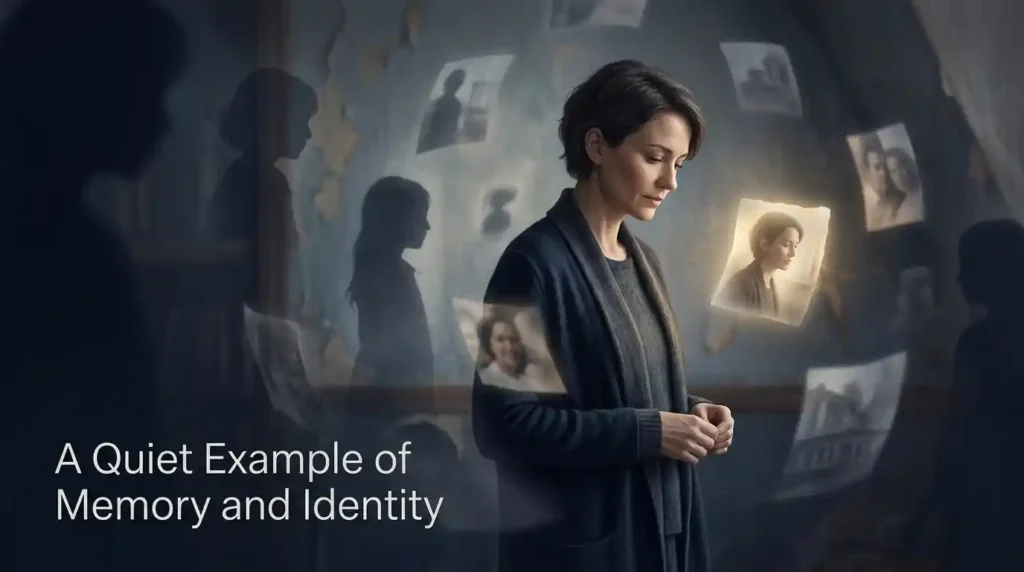
There are people who only know an old version of you.
That version still exists somewhere preserved in their memory, intact, unchanged even though it no longer exists anywhere else in the world. In a strange sense, you are not fully in control of your own story. Other people hold chapters of it that you yourself have moved on from.
This is not a piece of information. It is an observation. But the observation has weight in a way that information does not. It connects to something most people have felt but never quite named.
This is the register Curiowhisper operates in. Not the register of facts, but the register of felt truths.
The Idea Most People Never Realize About Content
Here is something that content creators rarely talk about openly.
The most widely shared pieces of writing are almost never the most informative. They are the pieces that made someone feel seen, or surprised, or strangely moved by an idea they had never encountered in exactly that form before.
This suggests something important: the value of content is not in what it transmits but in what it triggers. The words are not the destination. They are a mechanism for producing a particular state of mind in the reader one that the reader will then carry forward into their day, their conversations, their decisions.
Most content ignores this entirely. It treats writing as a delivery system. Curiowhisper treats writing as a conversation between the idea and the reader’s interior life.
The distinction sounds subtle. The experience of it is not.
How Writers and Creators Can Apply This
The principles behind Curiowhisper are not proprietary. They are available to anyone who is willing to slow down long enough to use them.
Start with a question that you yourself find genuinely unresolved. Not a question you already know the answer to, and not a question whose answer is merely a Google search away. A real question the kind that sits at the edge of what you understand and points toward something you haven’t fully worked out yet.
Write toward the question rather than past it. Allow the complexity to exist on the page. Resist the instinct to resolve everything. A piece of writing that ends with a reader in a state of productive uncertainty has done more for them than one that tied everything into a neat conclusion.
Use observation rather than assertion where possible. Instead of stating that something is true, describe the experience of noticing it. “Most people feel this” is an assertion. “You have probably felt this” is an invitation. The second form respects the reader’s autonomy and creates the conditions for genuine recognition rather than passive reception.
Trust silence. Not every section needs to be expanded. Some insights are stronger when they are delivered and then left alone when the writing moves on without over-explaining, allowing the reader’s mind to do the work that writing cannot.
Why Deep Content Will Matter More in the AI Era
By 2026, the internet will contain more AI-generated content than at any point in history. Much of it will be well-organized, grammatically correct, and informatively complete.
Most of it will be instantly forgettable.
This is not a criticism of AI as a technology. It is an observation about what AI currently optimizes for: coherence, coverage, relevance. These are genuine virtues. But they are not the same virtue as depth, and they are not the same virtue as the feeling of being genuinely surprised by an idea.
The result is a coming paradox: as content becomes easier to produce, the content that carries actual weight the content that has been written by a human who was genuinely curious about something and stayed with that curiosity long enough to render it clearly will become rarer. And things that are rare tend, eventually, to become valuable.
The trust economy of the next decade will not be won by the loudest voices or the most frequent publishers. It will be won by the creators who have cultivated a reputation for never wasting the reader’s time for delivering, in every piece, something worth carrying forward.
Curiowhisper is a bet on that future.
Conclusion
The internet is full of information.
What people are genuinely hungry for what they navigate toward even when they can’t name it is meaning. The experience of reading something and feeling, at the end, that the world is slightly more legible than it was before. That some corner of human experience has been named that was previously nameless.
The creators who understand this difference who build their entire practice around closing the gap between information and insight will not just attract readers.
They will be remembered.
