

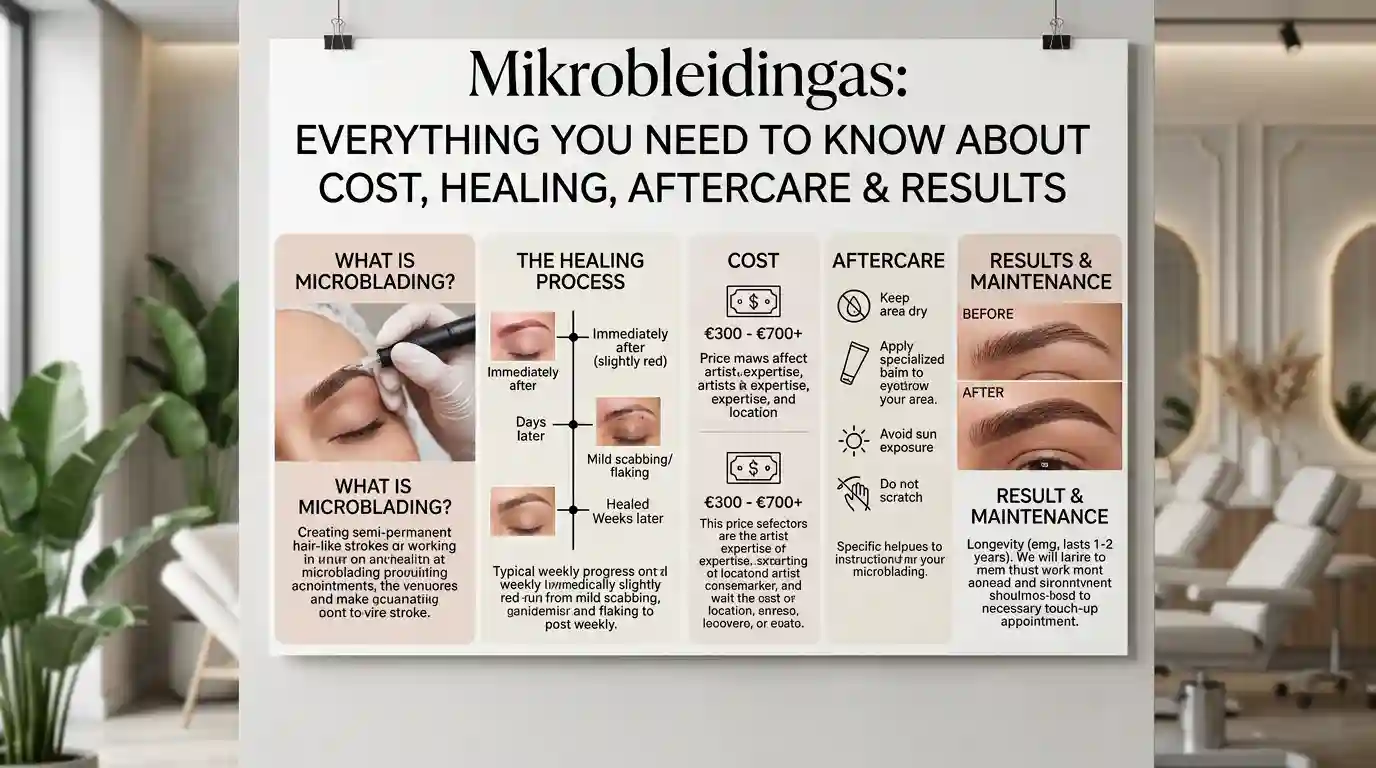
Sparse, uneven, or over-plucked eyebrows are one of the most common beauty frustrations, and it’s a big reason why mikrobleidingas has become one of the most requested brow treatments worldwide. This semi-permanent technique deposits pigment into the upper layers of the skin using fine, hair-like strokes, creating the appearance of natural, fuller brows without daily makeup.
If you’re researching this treatment for the first time, you probably have questions about price, pain, healing time, and how long the results actually last. This guide breaks down everything with real numbers, practical timelines, and honest advice so you can decide with confidence.
What Is Mikrobleidingas Exactly?
Mikrobleidingas is a cosmetic tattooing method that uses a handheld tool tipped with a cluster of tiny needles instead of a machine. A trained technician drags this tool across the skin in short, feathery motions that mimic the direction and texture of natural brow hair. Pigment settles into the upper dermis — shallower than a traditional tattoo — which is why the result is described as semi-permanent rather than permanent.
Unlike ink from a tattoo gun, the pigment used in this technique is designed to soften and fade gradually. That’s a deliberate feature, not a flaw: it allows your brows to be adjusted as trends, face shape, or personal preference change over time.
Who Is a Good Candidate?
- Have thin, sparse, or asymmetrical eyebrows.
- Spend significant time filling in their brows daily
- Have lost brow hair due to over-plucking, alopecia, or medical treatment
- Want a low-maintenance beauty routine
It’s generally not recommended for people who are pregnant or breastfeeding, undergoing chemotherapy, prone to keloid scarring, or dealing with active skin conditions like eczema or psoriasis in the brow area. A reputable technician should ask about your medical history before booking a session.
The Mikrobleidingas Healing Process, Stage by Stage
Understanding what happens to your skin after the procedure helps you set realistic expectations and avoid panicking during the less glamorous parts of healing.
Stage 1: Days 1–3 (Bold and Dark)
Right after your session, brows will look noticeably darker and more defined than the final result. Some redness and mild swelling are normal. This is simply how fresh pigment appears on the skin’s surface before it settles.
Stage 2: Days 4–10 (Flaking and Scabbing about mikrobleidingas )
The treated area may develop light flaking or scabbing as the skin regenerates. This stage is often called the “ghosting phase,” and it’s tempting — but important not to pick at your brows, since doing so can pull out pigment and cause patchy results.
Stage 3: Days 10–20 (Faded and Patchy)
As scabs fall away, brows can look unexpectedly light or patchy. This is completely normal and does not reflect the outcome. The skin is still healing beneath the surface, and pigment continues to settle.
Stage 4: Weeks 4–6 (Final Reveal about mikrobleidingas )
By around the one-month mark, the true color and shape of your results become visible. This is also when your touch-up appointment is scheduled to fill in any sparse spots and refine the shape.
Aftercare: What to Do (and Avoid)
Proper aftercare directly affects how well your mikrobleidingas results hold up and how evenly the pigment heals. Here’s a practical breakdown:
First 48 hours:
- Avoid touching the treated area with unwashed hands
- Do not apply makeup directly on the brows
- Sleep on your back if possible to avoid rubbing pigment off
Days 1–7:
- Keep brows completely dry — no sweating, swimming, saunas, or long hot showers
- Avoid washing your face directly over the brow area
- Apply the aftercare balm your technician provides, in a thin layer, as instructed
- Skip facials, chemical peels, and exfoliating products near the brows
Weeks 2–6:
- Let any scabbing flake off naturally; never pick or scratch
- Avoid direct sun exposure and always use SPF once the area is fully healed
- Steer clear of retinols, AHAs, and BHAs on the brow area, since these accelerate pigment fading
Long-term maintenance:
- Apply sunscreen to your brows daily — UV exposure is the single fastest way to fade or discolor pigment
- Blot excess oil if you have oily skin, since oil can blur the crispness of the hair strokes
- Book your annual touch-up before brows fade completely; it’s more cost-effective than restarting from scratch
How Long Does Microblading Last?:
- Skin type — oily skin tends to push pigment out faster than dry or normal skin
- Sun exposure — frequent UV exposure without SPF accelerates fading
- Skincare routine — retinoids and exfoliating acids speed up pigment breakdown
- Lifestyle factors — frequent sweating, swimming, or an active outdoor lifestyle can shorten longevity
- Individual biology — metabolism and immune response affect how quickly the body processes pigment
Other Brow Treatments
| Treatment | Technique | Longevity | Best For |
| Powder brows / ombré brows | Machine, soft shading | 2–3 years | Fuller, makeup-like finish |
| Nano brows | Machine with fine needle | 18–36 months | Oily skin, crisp hair strokes |
| Brow lamination | Chemical, no needles | 6–8 weeks | Temporary, needle-free thickness |
| Brow tinting | Semi-permanent dye | 4–6 weeks | Short-term color boost only |
Is Mikrobleidingas Safe? Risks to Know
Microblading is considered a minimally invasive procedure, but it still involves breaking the skin, which carries some risk. Choosing a licensed, experienced technician significantly lowers these risks. Potential complications include:
- Infection from improperly sterilized tools
- Allergic reactions to pigment
- Uneven healing or patchy results
- Scarring if the technique is too aggressive
- Dissatisfaction with shape or color that requires correction work
Before booking, verify that your technician is certified, works in a clean and licensed studio, and uses single-use, sterile needles. Ask to see healed results in their portfolio, not just fresh, freshly-inked photos, since healed brows are the true test of skill.
Real-World Example:
Consider a client with thin, over-plucked brows who books an initial session for $550. The appointment takes about two and a half hours, including brow mapping and pigment selection. Brows appear bold for the first few days, flake between days five and ten, and look slightly patchy through week two. By week five, she returns for her included touch-up, where the technician fills in a few sparse areas near the tail of the brow. From that point, she applies SPF daily and avoids retinol near her brows. At the 14-month mark, she books a $280 color boost to refresh fading strokes — a pattern that, if repeated annually, keeps her results looking fresh for years at a fraction of the cost of daily brow makeup.
Frequently Asked Questions About mikrobleidingas
Does mikrobleidingas hurt?
Most clients describe the sensation as mild scratching or pressure rather than sharp pain, since a numbing cream is typically applied before and during the procedure.
How long does an appointment take?
The first session usually takes two to three hours, including consultation, brow mapping, and pigment matching. The actual strokework itself takes 30–45 minutes.
Can I wear makeup afterward?
Avoid makeup directly on the brows for about a week. You can typically resume normal makeup elsewhere on your face right away.
Will the results look natural?
When done by a skilled technician, results should mimic real hair growth patterns. Ask to see healed (not just fresh) portfolio photos before booking.
Can it be removed if I don’t like it?
Because the skin’s surface is where the pigment is placed closer than tattoo ink, it can often be lightened through laser removal or saline removal, although multiple sessions may be required.
How soon before an event should I book it?
Most professionals recommend scheduling your first session at least six months to a year before a major event like a wedding, since healing and possible touch-ups take time.
Is it covered by insurance?
No, it’s considered a cosmetic procedure and is not covered by standard health insurance. Some studios offer payment plans or financing options.
Conclusion
Mikrobleidingas offers a practical solution for anyone tired of drawing on their eyebrows every morning, but it’s an investment that requires research, patience through the healing process, and consistent aftercare. Expect to pay between $400 and $900 for your first session, plan for a touch-up within two months, and budget for annual maintenance to keep results looking sharp. Most importantly, choose a certified, experienced technician — the single biggest factor in whether your results look natural, heal evenly, and last as long as they should.
